Pool and Spa Equipment Lifecycle: A Component-by-Component Checklist
Why Pool and Spa Components Deserve Their Own Plan
Pool and spa systems are among the most expensive shared amenities an association owns. A single pump replacement runs a few thousand dollars. A full resurfacing job can cost tens of thousands. When boards treat these as one lumped line item in the reserve study, they miss the fact that each part wears out on its own schedule. A pump might last 8 years while the plaster surface lasts 15. If you replace them as if they age together, you either overspend early or scramble to fund an unexpected failure.
This checklist breaks the pool and spa area into four component groups: pumps and motors, heaters, interior surfaces, and decking. For each, you get a realistic lifespan, the warning signs of end of life, and the inspection steps to run each year.
The lifespans below are general planning ranges, not guarantees. Climate, water chemistry, usage and maintenance all move them, so use the figures from your own reserve study where they differ.
1. Pumps and Motors
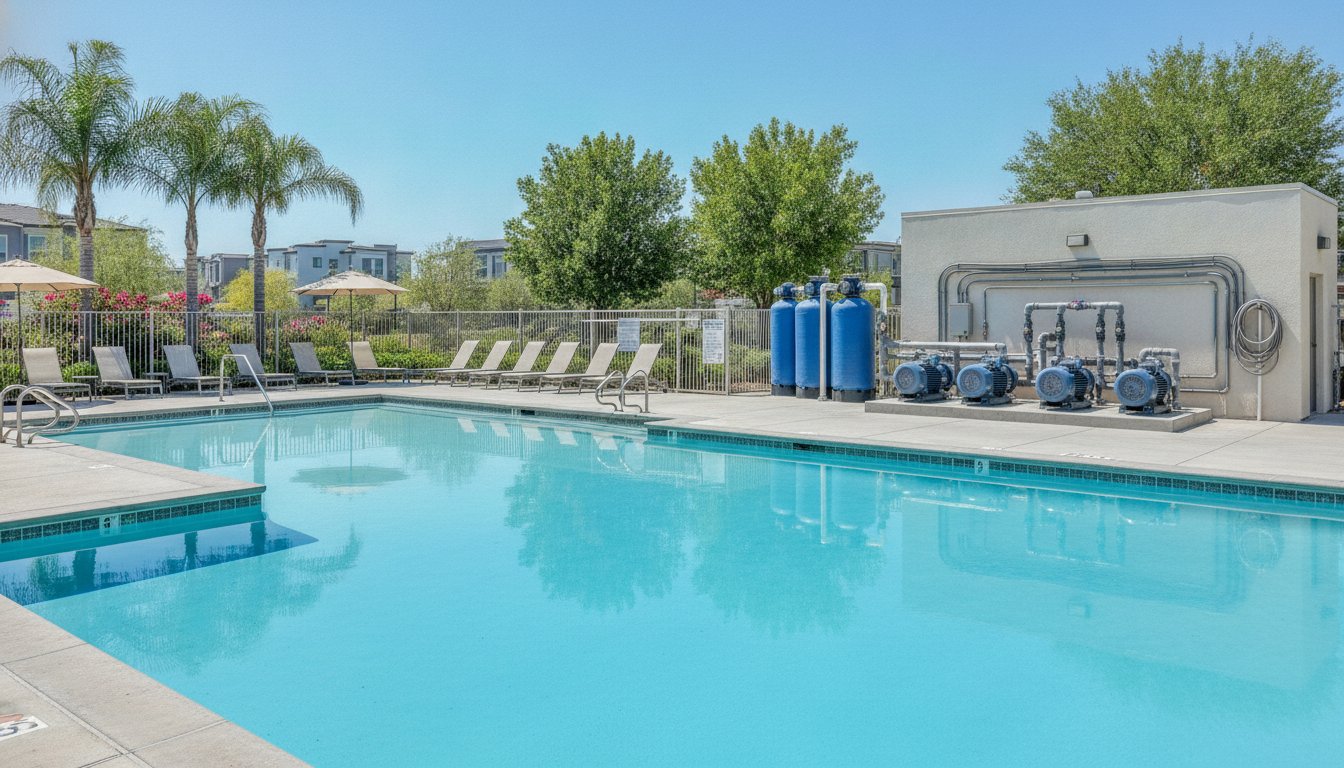
The circulation pump moves water through the filter and heater. It runs for thousands of hours each season, so it wears out faster than almost any other component.
Typical Lifespan
- Standard single-speed pumps: 7 to 10 years
- Variable-speed pumps: 8 to 12 years, with better energy savings
- Spa jet pumps: 6 to 9 years due to heavier cycling
Annual Inspection Checklist
- Listen for grinding, screeching, or humming when the motor starts. These point to failing bearings.
- Check the pump housing and seals for water leaks.
- Confirm the pump reaches full flow within a few seconds of startup.
- Inspect the motor for rust, corrosion, or scorch marks near the electrical connections.
- Record the amperage draw and compare it to prior years. A rising draw signals the motor is working harder than it should.
When a single-speed pump reaches year 8, start budgeting for a variable-speed replacement. Many states now require variable-speed pumps for commercial and community pools, so factor code compliance into your timing.
2. Heaters
Pool heaters take the hardest chemical and thermal abuse of any component. Gas heaters, heat pumps, and solar systems each age differently, so identify what you have before you set a replacement year.
Typical Lifespan
- Gas heaters: 7 to 12 years
- Electric heat pumps: 10 to 15 years
- Solar heating systems: 10 to 20 years for panels, less for the controls
Annual Inspection Checklist
- Look inside the burner tray on gas units for rust flakes, soot, or corroded tubes.
- Check for scale buildup on the heat exchanger, which is the top cause of premature gas heater failure.
- Confirm the unit reaches target temperature within the expected time. Slow heating means declining efficiency.
- Test the pressure switch and high-limit safety controls.
- Verify the gas line and connections show no corrosion or leaks.
Unbalanced water chemistry destroys heat exchangers faster than anything else. If your association has struggled with pH control, expect the heater to fail on the early end of its range. Track that history and adjust your reserve timeline accordingly.
3. Interior Surfaces
The interior finish, whether plaster, pebble, tile, or a fiberglass shell, protects the structure and keeps the water contained. Surface failure is gradual, then sudden. Small cracks let water reach the shell, and repairs get expensive once that happens.
Typical Lifespan
- Standard white plaster: 10 to 15 years
- Quartz or pebble finishes: 15 to 20 years
- Tile surfaces: 20 or more years for the tile itself, though grout needs periodic work
- Fiberglass shells: 15 to 30 years
Annual Inspection Checklist
- Run your hand along the walls and floor for rough, etched, or flaking areas.
- Look for staining, discoloration, or dark blotches that resist normal cleaning.
- Check for hairline cracks, especially near steps, corners, and returns.
- Inspect the waterline tile and grout for loose or missing pieces.
- Note any spots where the finish has worn through to the gray substrate underneath.
Once you see exposed substrate or spreading cracks, resurfacing moves from optional to urgent. Plan for it two to three years before the surface reaches the end of its range so you have time to fund it and schedule the work in the off-season.
4. Decking and Coping
The deck and coping surround the pool and take constant foot traffic, sun, and freeze-thaw cycles in colder climates. Cracked or lifted decking is both a repair cost and a trip-and-fall liability.
Typical Lifespan
- Concrete decking: 15 to 25 years
- Pavers: 20 to 30 years with periodic resetting
- Cool-deck coatings: 5 to 8 years before recoating
- Coping stones: 15 to 25 years
Annual Inspection Checklist
- Walk the entire deck and mark any cracks wider than a quarter inch.
- Check for settling, heaving, or uneven sections that create trip hazards.
- Inspect the joint between the coping and the deck for separation or crumbling caulk.
- Test drainage after rain. Standing water accelerates deck failure and points to grading problems.
- Look for loose or hollow-sounding coping stones by tapping along the edge.
Re-caulking the expansion joint between coping and deck is cheap and prevents water from getting underneath. Skipping it leads to the kind of undermining that turns a caulk job into a full deck replacement.
Putting It All Together
Give each of these four component groups its own line in your reserve study, its own remaining life estimate, and its own replacement cost. Run this checklist every spring before the season opens, and log what you find. A pump that drew more amps this year than last is telling you something. Cracks that grew since the last inspection are telling you something too. That yearly record is what turns guesswork into a defensible funding plan.
ReservePath helps associations track pool and spa components individually, record inspection findings year over year, and build a funding plan that matches each part's real lifespan. That way the next resurfacing or heater replacement is already paid for when it comes due.
This article is for general informational purposes only and is not legal advice. Consult your association's legal counsel on all matters.