Seasonal HVAC Maintenance Checklists for Multi-Unit Properties
Multi-unit properties face unique HVAC challenges. Complex systems, multiple zones, and shared components require systematic maintenance to prevent costly breakdowns and extend equipment life. A seasonal maintenance approach protects your association's investment while keeping residents comfortable year-round.
Spring HVAC Maintenance Checklist
Spring preparation sets the foundation for efficient cooling season performance. Start these tasks in March or April, before peak demand begins.
Central Air Systems
- Replace air filters in all units and common areas. Standard 1-inch filters need monthly replacement during peak seasons.
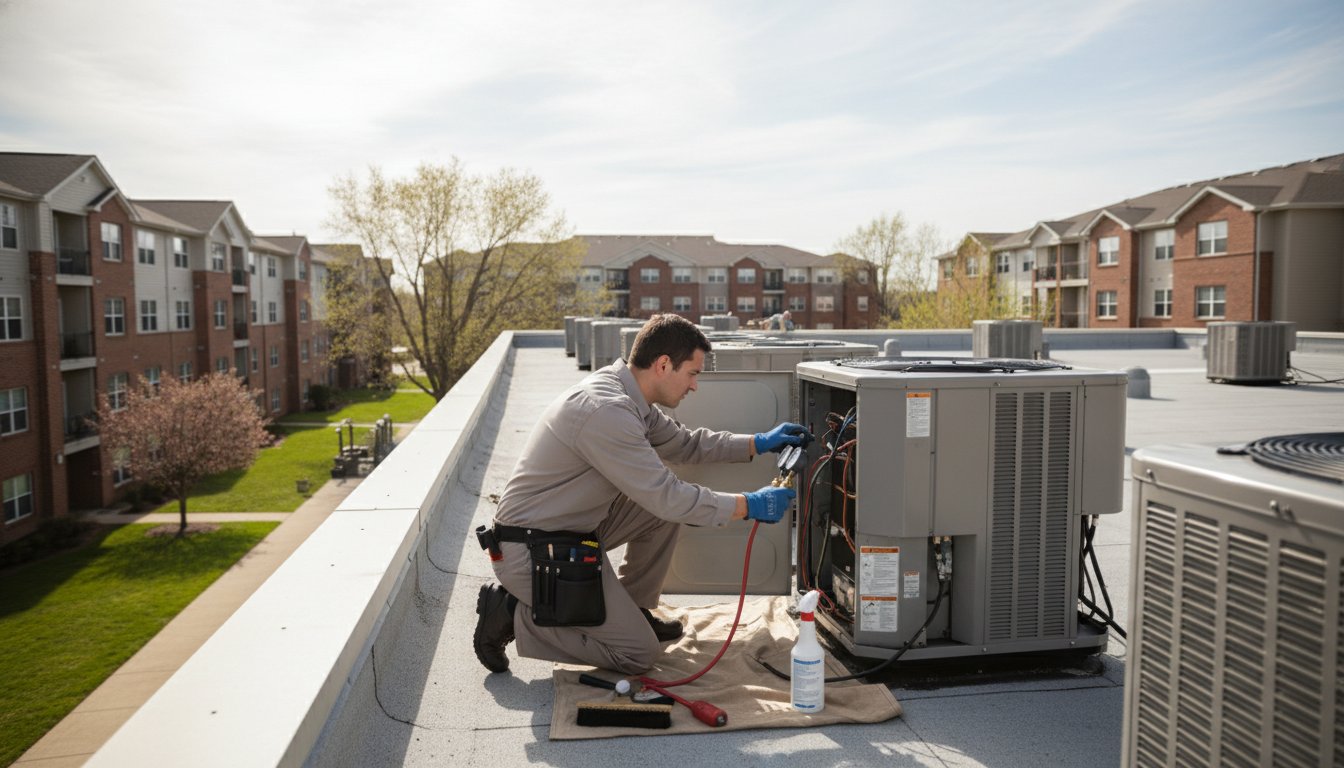
- Clean outdoor condenser coils using a soft brush and coil cleaner. Remove debris, leaves, and dirt that accumulated over winter.
- Check refrigerant levels and inspect for leaks. Low refrigerant reduces efficiency and can damage compressors.
- Test thermostat calibration in each unit. Verify settings match actual temperatures.
- Inspect ductwork for loose connections, damaged insulation, and air leaks in accessible areas.
Building Systems
- Lubricate motor bearings and moving parts according to manufacturer specifications.
- Check electrical connections for corrosion, loose wires, and proper voltage readings.
- Test safety controls including pressure switches and temperature limits.
- Calibrate building automation systems and update seasonal schedules.
Summer HVAC Maintenance Checklist
Summer maintenance focuses on peak performance and preventing emergency breakdowns during the hottest months.
Monthly Tasks
- Monitor system performance through energy usage reports and resident complaints.
- Check condensate drains for clogs that can cause water damage and humidity issues.
- Inspect outdoor units for proper airflow and clear vegetation at least 3 feet around equipment.
- Review maintenance logs to identify patterns or recurring issues requiring attention.
Mid-Summer Deep Maintenance
- Clean evaporator coils in air handling units to maintain heat transfer efficiency.
- Check belt tension and replace worn belts before they fail.
- Test emergency shutoff procedures and ensure all staff know proper protocols.
- Verify backup power systems for critical HVAC components function properly.
Fall HVAC Maintenance Checklist
Fall preparation transitions systems from cooling to heating mode while addressing issues discovered during summer operation.
Heating System Preparation
- Inspect heat exchangers for cracks, corrosion, or damage that could pose safety risks.
- Test heating elements and verify proper operation before cold weather arrives.
- Check gas connections and perform leak tests on all joints and fittings.
- Clean burner assemblies and adjust combustion settings for optimal efficiency.
System Transitions
- Switch thermostat settings from cooling to heating mode in each unit.
- Test zone dampers and adjust for proper heating distribution.
- Inspect chimney and venting systems for blockages or damage.
- Schedule professional combustion analysis to verify safe operation and efficiency.
Winter HVAC Maintenance Checklist
Winter maintenance emphasizes safety, efficiency, and preventing freeze damage to systems.
Cold Weather Protection
- Insulate exposed pipes and add heat tape where necessary to prevent freezing.
- Check outdoor air intakes and clear snow or ice buildup regularly.
- Monitor heating performance and respond quickly to resident comfort complaints.
- Test carbon monoxide detectors in units with gas appliances monthly during heating season.
Equipment Monitoring
- Track energy consumption patterns to identify inefficient equipment or operational issues.
- Inspect emergency heating systems and verify backup equipment functions properly.
- Check building envelope for air leaks that increase heating loads and costs.
- Review maintenance contracts and ensure service providers respond promptly to emergency calls.
Documentation and Record Keeping
Proper documentation protects your association and supports warranty claims. Maintain detailed records of all maintenance activities.
Essential Records
- Service logs with dates, technician names, and work performed
- Equipment specifications including model numbers, installation dates, and warranties
- Energy consumption data to track efficiency trends over time
- Repair history to identify equipment nearing replacement
Professional Service Integration
Some maintenance tasks require licensed professionals. Plan contractor visits around your seasonal checklist schedule.
Schedule HVAC contractors for spring startups and fall shutdowns. Many companies offer service contracts that include seasonal maintenance at reduced rates. Coordinate these visits with your internal maintenance schedule to avoid duplicating efforts.
Emergency repairs cost significantly more than preventive maintenance. A well-run seasonal maintenance program reduces emergency service calls and extends equipment life.
ReservePath helps associations track HVAC components, schedule maintenance, and plan replacement funding through reserve study management.
This article is for general informational purposes only and is not legal advice. Consult your association's legal counsel on all matters.