California SB 326 and SB 721: Balcony Inspection Requirements for HOAs
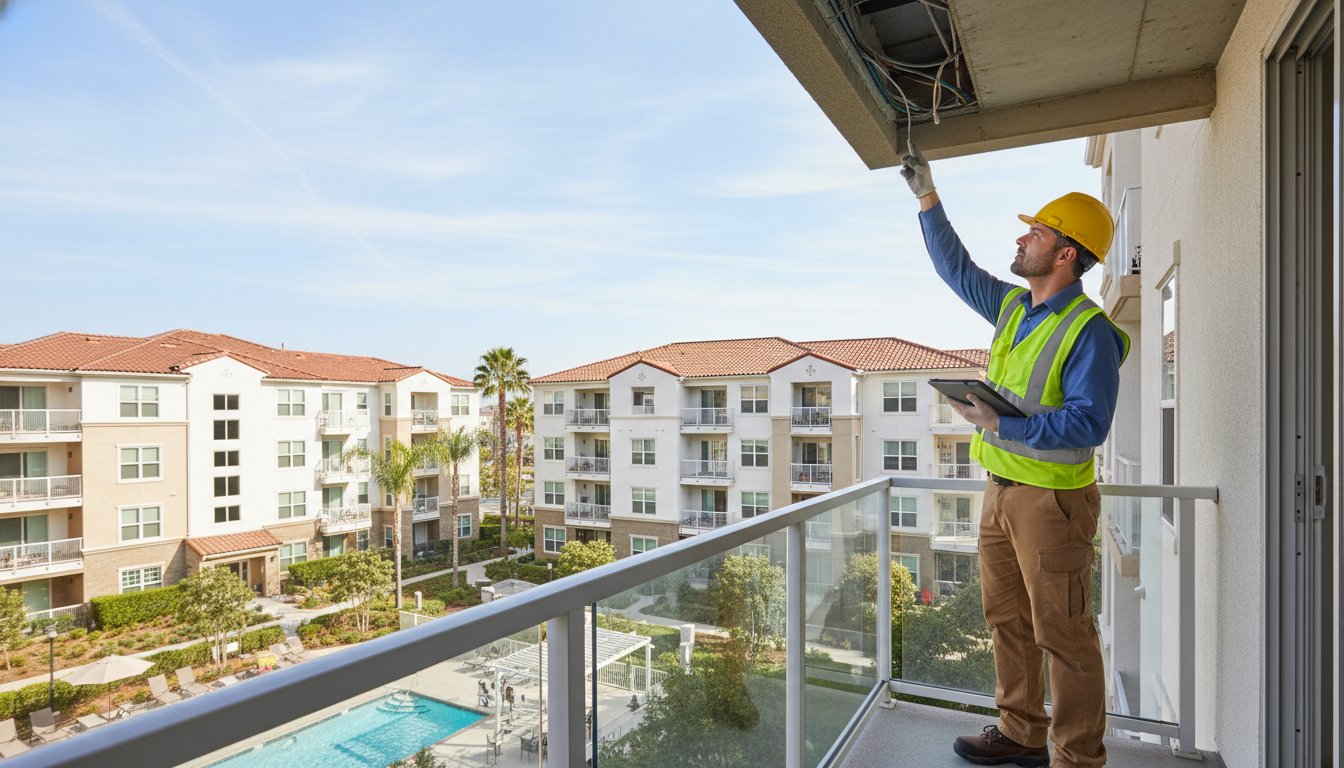
California SB 326 (Civil Code 5551) requires condominium associations with buildings of three or more multifamily dwelling units to have a licensed professional inspect a sample of their wood-supported balconies, decks, stairways and walkways, along with the waterproofing. The first inspection was due by January 1, 2025, and inspections repeat at least every nine years. If the inspector finds an immediate safety threat, the association must keep people off the affected area until repairs are approved.
California's Balcony Inspection Laws: What HOAs Must Know
California has two balcony inspection laws, and they apply to different buildings. Senate Bill 326 covers condominium associations. Senate Bill 721 covers apartment buildings. Both followed the 2015 Berkeley balcony collapse that killed six people. Knowing which law applies to your building is the first step for any California board or property manager.
Senate Bill 326: The Law for Condominium Associations
SB 326 added Section 5551 to the Civil Code, part of the Davis-Stirling Act, effective January 1, 2020. It applies to condominium projects with buildings that contain three or more multifamily dwelling units. The association must arrange an inspection of the exterior elevated elements it is responsible for maintaining or repairing.
What Counts as an Exterior Elevated Element
The statute is narrower than "every balcony". It covers the load-bearing components, and their associated waterproofing systems, that meet all of these tests:
- They extend beyond the exterior walls of the building to carry structural loads to decks, balconies, stairways, walkways and their railings.
- They have a walking surface elevated more than six feet above ground level.
- They are designed for human occupancy or use.
- They are supported in whole or in substantial part by wood or wood-based products.
An element that fails any one of these tests, such as a balcony supported entirely by steel or concrete, is outside this particular law. Ask your inspector to confirm what is covered at your property.
Inspection Timeline and Requirements
Associations had to complete their first inspection by January 1, 2025. After that, an inspection is required at least once every nine years. The statute ties the timing to the reserve study, so many boards schedule it alongside the reserve study's own site inspection.
The inspector does not have to open up every balcony. The law calls for a random, statistically significant sample, large enough to give 95 percent confidence that the results reflect the whole, with a margin of error of no more than plus or minus 5 percent.
The inspector's written report identifies the components inspected, their current condition and whether any poses an immediate threat to safety, their expected future performance and remaining useful life, and recommendations for repair or replacement. The report is meant to be incorporated into the association's reserve study.
Senate Bill 721: The Companion Law for Apartments
SB 721 (Health and Safety Code 17973) sets similar inspection rules for buildings with three or more multifamily dwelling units that are not common interest developments, which in practice means apartment buildings. It uses a six-year inspection cycle.
SB 721 does not apply to condominium associations. Boards sometimes see the six-year figure and assume it is theirs. For a condominium association the interval under SB 326 is nine years. If your community is a different kind of common interest development, such as a planned development or a stock cooperative, ask your association's attorney which requirements apply to you.
Emergency Repairs and Immediate Hazards
The law requires fast action when an inspection finds a threat to safety. If the inspector concludes that an element poses an immediate threat:
- The inspector gives the report to the association immediately, and to the local code enforcement agency within 15 days.
- The association must take preventive measures immediately, including preventing occupant access to the element.
- Access stays closed until the repairs have been inspected and approved by the local enforcement agency.
A board that leaves a known hazard open is exposed to serious liability. Treat an immediate-threat finding as an emergency.
Financial Impact and Reserve Planning
These inspections create a recurring cost, and the larger cost often follows from what they find. Inspection fees vary widely with the number of buildings, how the elements are built and how easy they are to reach, so get written quotes from qualified firms.
Balcony and deck repairs can involve waterproofing work, structural reinforcement or full reconstruction. Costs depend on the damage found and local construction prices. Associations with many buildings can face a large total.
Reserve Study Implications
SB 326 directly affects reserve study planning. Associations should account for:
- The inspection cost at least every nine years
- Repair costs identified through inspections
- Funds for emergency repairs when an immediate hazard is found
- The remaining useful life the inspector reports for each element
Many associations found their reserves were too low after the first round of inspections revealed repair needs.
Professional Requirements and Qualifications
The inspection must be done by a licensed structural engineer, a licensed civil engineer or a licensed architect. Civil engineers were added by AB 2114 in 2024. General contractors, building inspectors and property managers cannot perform the required inspection.
Look for a professional with experience in wood-framed exterior elements and waterproofing systems. Verify the license and ask for examples of similar inspections before hiring.
Documentation and Record Keeping
Keep a clear record of every inspection and what followed. That includes:
- The complete inspection report
- Any emergency measures and repairs, with dates
- Notices sent to residents about closed areas
- Permits and the local agency's approval of repairs
Buyers, lenders and insurers may ask for these documents.
Common Compliance Challenges
Budget constraints: Associations without adequate reserves face difficult decisions about special assessments or loan financing for required repairs.
Inspector availability: Demand for qualified inspectors can create scheduling delays.
Repair complexity: Balcony and deck repairs often require permits, engineering plans and specialized contractors.
Resident disruption: Inspection and repair work can limit residents' use of their units and common areas.
Best Practices for Compliance
Schedule inspections well ahead of the due date. Start planning 12 to 18 months before.
Budget for both inspections and likely repairs. The reserve study should carry realistic figures for each.
Tell residents early about inspection schedules, access needs and any safety concerns.
Build relationships with qualified engineers, architects and contractors before you need them.
Moving Forward with Confidence
California's balcony inspection law is an ongoing obligation, not a one-time task. Put the nine-year cycle on the association's calendar, keep maintaining adequate reserves for inspections and repairs, and work with professionals who know the statute.
ReservePath helps associations track their exterior elevated elements, plan for inspection cycles and manage the reserve funding behind them.
Frequently Asked Questions
Which California HOAs must comply with SB 326?
SB 326 applies to condominium projects with buildings that contain three or more multifamily dwelling units. It covers the exterior elevated elements the association is responsible for maintaining or repairing.
How often are SB 326 balcony inspections required?
At least once every nine years. The first inspection was due by January 1, 2025. The six-year cycle belongs to SB 721, which covers apartment buildings, not condominium associations.
What is an exterior elevated element under SB 326?
It is a load-bearing component, with its waterproofing, that extends beyond the exterior walls, has a walking surface more than six feet above ground, is designed for people to use, and is supported in whole or in substantial part by wood or wood-based products. Balconies, decks, stairways and walkways are the usual examples.
Who can perform an SB 326 inspection?
A licensed structural engineer, a licensed civil engineer or a licensed architect.
What must an HOA do if a balcony inspection finds an immediate hazard?
The association must take preventive measures immediately, including keeping people off the affected element, until the repairs have been inspected and approved by the local enforcement agency. The inspector also reports the finding to the local code enforcement agency within 15 days.
How do balcony inspections affect an HOA reserve study?
The inspection report is meant to be incorporated into the reserve study. The study should budget for the recurring inspection and for the repairs and remaining useful lives the inspector reports.
Sources
This article is for general informational purposes only and is not legal advice. Consult your association's legal counsel on all matters.