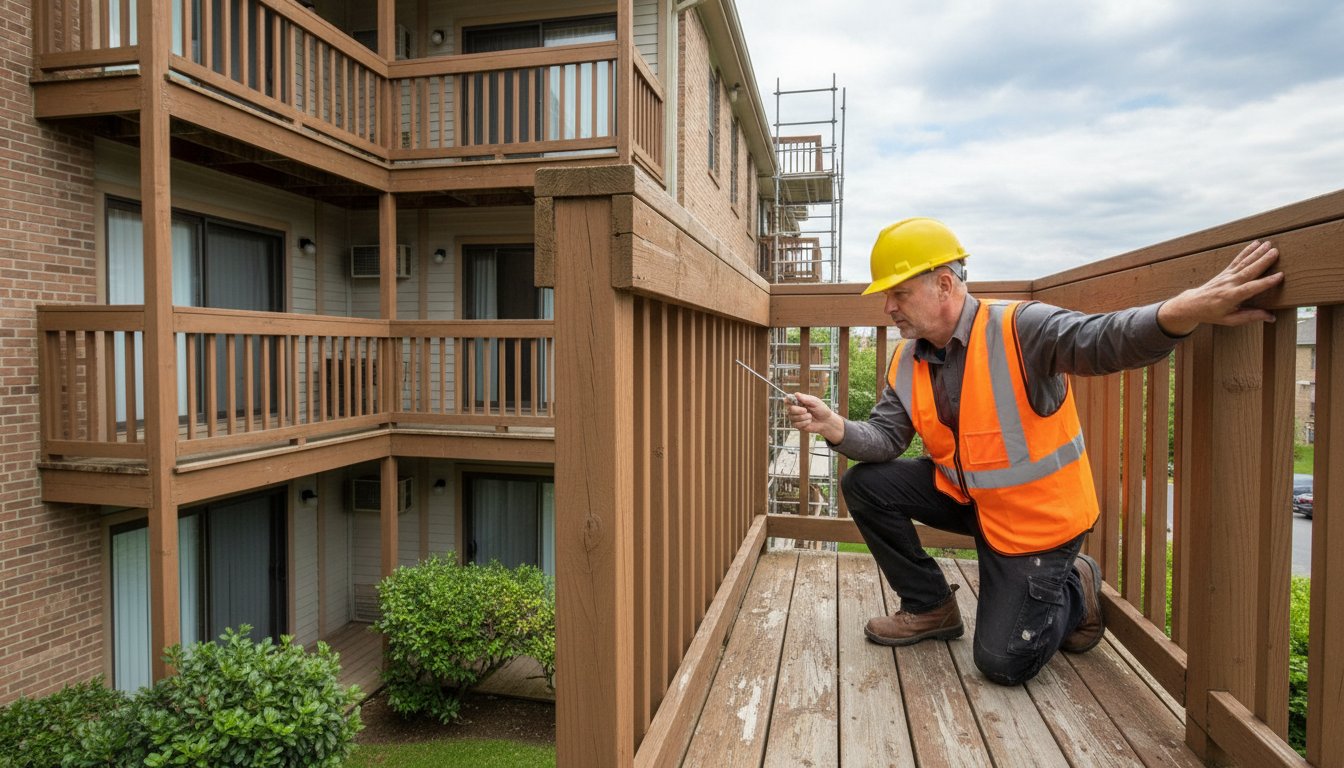
California SB 326: Your Complete Balcony Inspection Compliance Guide
Understanding California SB 326: The Balcony Safety Law
California Senate Bill 326, enacted in 2019, requires regular inspection of exterior elevated elements (EEEs) in multifamily residential buildings with three or more units. The law emerged from tragic balcony collapses that killed and injured residents across the state.
This legislation affects thousands of HOAs and condo associations throughout California. Your association faces specific deadlines, inspection requirements, and potential penalties for non-compliance.
What Structures Must Be Inspected
SB 326 covers exterior elevated elements more than six feet above ground level that rely on wood or wood-based products for structural support. The law specifically includes:
- Balconies
- Decks
- Porches
- Stairways
- Walkways
- Railings
The key distinction is that these structures must have load-bearing wood components. Metal-framed balconies with wood decking typically don't qualify if the wood isn't structural.
Associated Waterproofing Systems
Inspections must also examine the waterproofing elements that protect these structures, including:
- Membranes and coatings
- Flashings and sealants
- Drainage systems
- Deck substrates and framing
Critical Compliance Deadlines
Your association's first inspection deadline depends on when your building received its certificate of occupancy:
- Before January 1, 2019: First inspection due by January 1, 2025
- January 1, 2019 or later: First inspection due by January 1 of the sixth year after occupancy
After the initial inspection, you must conduct follow-up inspections every six years.
Emergency Situations
If an inspector identifies immediate safety hazards, you have strict timelines:
- 24 hours: Restrict access to dangerous areas
- 30 days: Submit corrective work plans to local authorities
- 120 days: Complete emergency repairs (extensions possible with approval)
Inspector Qualifications You Need
Only specific professionals can conduct SB 326 inspections. Your inspector must be a licensed:
- Architect
- Civil engineer
- Structural engineer
The inspector must also carry professional liability insurance of at least $1 million per occurrence and $2 million aggregate.
Inspector Independence Requirements
Your inspector cannot have financial conflicts of interest. They cannot:
- Have ownership interest in your association
- Be employed by companies bidding on repair work
- Receive referral fees from contractors
The Inspection Process: What to Expect
A proper SB 326 inspection involves both visual examination and invasive testing. Your inspector will:
Visual Assessment
- Document all exterior elevated elements
- Photograph existing conditions
- Identify signs of water damage or deterioration
- Check railings and safety features
Invasive Testing
Inspectors must perform invasive testing, which means:
- Removing portions of decking or siding
- Drilling test holes to check framing
- Examining hidden structural connections
- Testing waterproofing membrane integrity
This testing will create some damage that requires repair. Budget for both inspection costs and restoration work.
Required Documentation and Reporting
Your inspector must provide a detailed written report within 45 days of completing the inspection. This report must include:
- Description of each exterior elevated element
- Current condition assessment
- Photographs of all inspected areas
- Recommended repair or replacement schedules
- Cost estimates for necessary work
Filing Requirements
You must file the inspection report with your local building department within 15 days of receiving it. Keep copies for your association records.
Budgeting for SB 326 Compliance
Inspection costs vary significantly based on your property size and complexity. Typical expenses include:
Inspection Fees
- Small properties (under 50 units): $3,000 to $8,000
- Medium properties (50-150 units): $8,000 to $15,000
- Large properties (over 150 units): $15,000 to $30,000
Repair and Restoration
- Minor repairs from invasive testing: $2,000 to $10,000
- Major structural repairs (if needed): $50,000 to $500,000+
- Full balcony replacement: $15,000 to $25,000 per unit
Planning Your Inspection Strategy
Start planning your SB 326 compliance at least 18 months before your deadline. Here's your action timeline:
18 Months Before Deadline
- Inventory all exterior elevated elements
- Begin budgeting for inspection and potential repairs
- Research qualified inspectors in your area
12 Months Before Deadline
- Solicit proposals from at least three qualified inspectors
- Review inspector credentials and insurance
- Schedule board meetings to discuss findings and budget
6 Months Before Deadline
- Execute inspection contract
- Notify residents about upcoming inspections
- Plan for temporary access restrictions
Common Compliance Mistakes to Avoid
Many associations make costly errors during SB 326 compliance. Avoid these pitfalls:
Using Unqualified Inspectors
Home inspectors or general contractors cannot perform SB 326 inspections. Only licensed architects and engineers qualify.
Ignoring Invasive Testing
Visual-only inspections don't meet SB 326 requirements. Your inspector must perform invasive testing to examine hidden structural elements.
Missing Filing Deadlines
Late inspection reports can result in fines and legal liability. Track your deadlines carefully and file reports promptly.
Inadequate Emergency Response
If inspectors find immediate hazards, you must act within 24 hours. Have emergency response plans ready before inspections begin.
Enforcement and Penalties
Local building departments enforce SB 326 compliance. Penalties for non-compliance can include:
- Civil penalties up to $500 per violation
- Additional fines for continued non-compliance
- Legal liability for injuries on non-compliant structures
- Insurance coverage disputes
Beyond financial penalties, non-compliance creates serious liability exposure if accidents occur on uninspected structures.
Moving Forward with Confidence
SB 326 compliance requires careful planning and proper execution. Start early, use qualified professionals, and maintain detailed records of all inspection activities.
Your reserve study should account for both regular SB 326 inspection costs and potential structural repairs. This planning helps ensure adequate funding for compliance and maintains your property's safety standards.
ReservePath helps California associations track their SB 326 compliance deadlines and budget for required inspections within their reserve planning process.